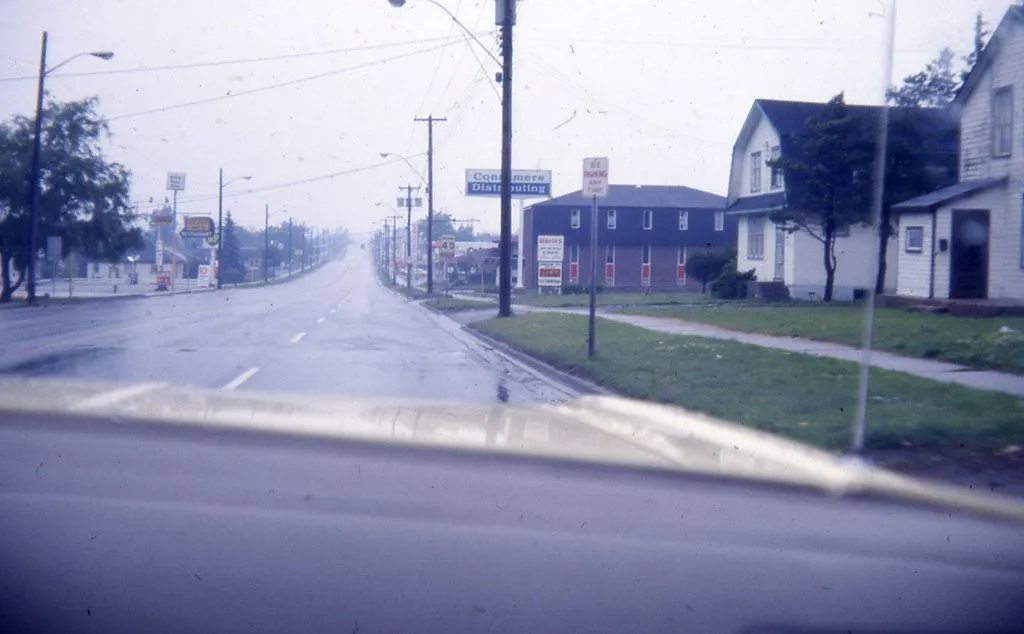
If you grew up in Ontario anytime from the 1960s to the mid-1990s, there's a fair chance you know the routine. You flipped through a big catalogue, found the thing you wanted, copied its long number onto a little order form with a stubby pencil, and handed it over at the counter. Then you waited, watching the doorway to the stockroom, hoping the clerk would come back carrying a box and not shaking their head.
That was Consumers Distributing. It was cheap, it was a little strange, and it was out of stock often enough to become a running joke. It was also, for a time, one of the most successful retailers in the country.
The story
Consumers Distributing started in Toronto in the mid-1950s with Jack Stupp, a former door-to-door salesman. TVO Today's history of the company dates the launch to 1956, when it began as a mail-order wholesaler; Retail Insider and blogTO give 1957. Retail Insider also names Sydney Druckman as a co-founder.
Within a few years Stupp opened a showroom in an industrial area. Shoppers picked up a clipboard, looked at the sample merchandise on display and filled out an order form. Staff then brought the goods out from the back. It was a stripped-down system, and that was the point. With no fancy displays, no sales staff working the aisles and stock kept in a warehouse instead of on shelves, Consumers could charge less.
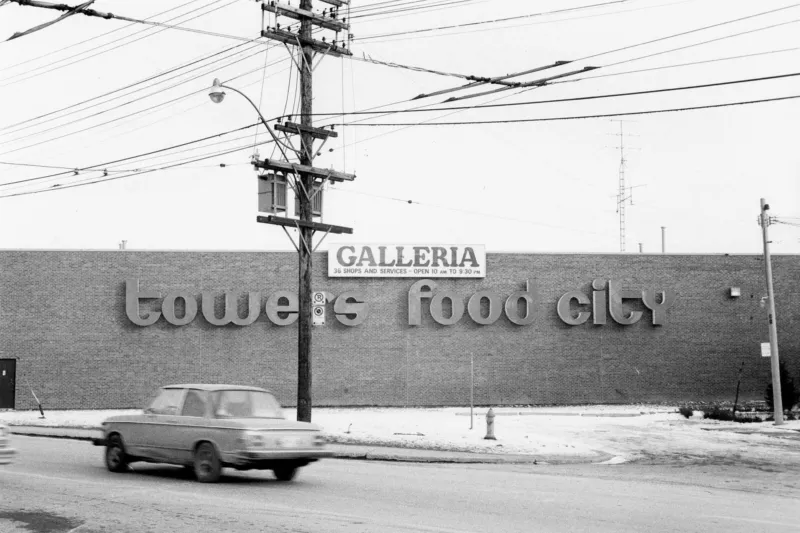
The format spread across Ontario in the early 1960s and then beyond. TVO reports that by 1969 a typical Consumers store was selling between $800 and $1,000 worth of goods per square foot. Big competitors managed $70 to $100. Prices generally ran 20 to 40 per cent below other chains. The company went public in 1969, according to Retail Insider. Around that time the Oshawa Group, the grocery wholesaler that also ran the Towers discount stores, held a 50 per cent interest in Consumers. It sold that stake in 1978.
Stupp was blunt about what he was offering:
"We sell inconvenience. But we save the customer money."
Jack Stupp, as quoted by TVO Today
The 1970s and early 1980s brought growth and trouble in roughly equal measure. A 1972 joint venture with May Department Stores took the concept into the United States. After the 1974 Christmas season the company got caught with an inventory crisis, and profits and the share price fell. Stupp bought back the American business in 1978. By 1983 Consumers claimed to be the biggest watch seller in Canada and its third-largest jewellery retailer. Toys sold so well that in the early 1980s the company launched Toy City, a separate toy chain modelled on American stores like Toys "R" Us.
At its peak, Retail Insider reports, Consumers had 243 stores in Canada and 217 in the United States, and in 1988 revenue passed $1 billion.
Stupp himself was gone by then. TVO reports that the Quebec grocer Provigo bought his shares in the summer of 1985. At the end of 1990, a consortium of Toronto's Westbourne Management Group and the Belgian holding company Ackermans & van Haaren bought the chain for $190 million.
Why people remember it
Part of it is the ritual. Very few stores ask you to do part of the clerk's job, and fewer still make a catalogue the centre of the whole visit. Retail Insider notes there were two main catalogues each year plus smaller seasonal ones, and the product lines changed twice a year. blogTO's look back remembers the six-digit item codes and the tiny blue pencils. Retail Insider's retrospective sums the whole thing up neatly: it was internet shopping before the internet. You browsed a picture, entered a code, and waited for the item to arrive. You just did it standing at a counter.
The idea was popular enough to be copied. blogTO notes that the Hudson's Bay Company launched its own knockoff catalogue chain in the 1970s. The fact that the Bay felt it needed one says a lot about how seriously the industry took the upstart from Toronto.
The catalogue itself mattered too. For kids, it could double as a wish book. Toys, watches, jewellery and electronics were all in there, priced below the big chains. blogTO noted in 2012 that old Consumers catalogues had become collector's items, selling for real money on eBay.
And then there's the part everyone laughs about now. The chain had a reputation for not having the thing you came for. Retail Insider describes how seriously the company took the problem. It tried a "Flashboard," a magnetic board listing items that were out of stock, along with store-to-store transfers, free home delivery and systems for checking stock in real time. The fact that a retailer needed a dedicated sign to announce what it didn't have tells you something.
What happened?
The out-of-stock problem was not just a joke. TVO points to it as a chronic hit to the chain's reputation. Reordering from the warehouse could take five days, the distribution system was ageing, and a computer system rolled out before the 1985 holiday season caused new headaches.
The world around the catalogue counter changed, too. Warehouse clubs and big-box stores offered low prices without the waiting. Walmart arrived in Canada in 1994. Retail Insider adds high operating costs, falling prices in jewellery and electronics, and the early-1990s recession to the list.
Consumers tried to modernize. In 1994 it opened "supercentres" that TVO describes as three times the size of a regular store, with 50 per cent more products and computer terminals that took credit cards in place of pencils and paper. The results were mixed.
In July 1996, Consumers Distributing filed for creditor protection with 217 stores. In September, its banks forced it into bankruptcy. The receiver, Coopers & Lybrand, kept 80 stores running for a while. The rest were liquidated, and by the winter of 1996 the chain was gone, roughly four decades after Stupp started selling by mail.
The name that keeps coming back
The brand has had a few afterlives. Retail Insider reports that a former employee, Marc King, relaunched Consumers Distributing as an online retailer in 2006. That version closed in 2013 amid allegations of unpaid wages, and in 2015 Consumer Protection BC issued a compliance order against it over deceptive practices and missed refunds. In 2012, blogTO reported that new owners were planning a pilot store in Niagara Falls. We couldn't confirm it ever opened.
In August 2023, Retail Insider interviewed entrepreneur Marco Revah about a "Consumers Distributing 2.0" with huge showrooms and an online marketplace planned for January 2024. As of October 2026, we haven't found any reporting that those showrooms opened.
Quick facts
- Founded: Toronto, mid-1950s (1956 per TVO; 1957 per Retail Insider and blogTO)
- Founder: Jack Stupp (Retail Insider also credits Sydney Druckman)
- How it worked: Choose from a catalogue or sample display, write the item code on an order form, collect at the counter
- Peak size: 243 stores in Canada and 217 in the U.S. (Retail Insider)
- Peak revenue: More than $1 billion in 1988 (Retail Insider)
- Owners over the years: Jack Stupp and partners; the Oshawa Group held half the company until 1978; Provigo bought Stupp's shares in 1985; a Toronto-Belgian consortium bought the chain at the end of 1990
- Sister chain: Toy City, launched in the early 1980s
- Fixes it tried: The Flashboard for out-of-stock items, home delivery, store-to-store transfers and 1994 supercentres
- Last chapter: Creditor protection in July 1996, bankruptcy that September, liquidation by winter